Sunday, 25 August 2019

A Visit to Mid Cornwall

Over the last three days we spent some time based near Truro touring around the local area.  
On the way down we visited Trerice, a Tudor Manor House, which was home to the Arundell Family from the 16th Century until the 18th Century.
Trerice House Near Newquay
 The Great Hall
 The Great Barn (now the tea room)

A view in the Gardens

he next day we started off at Trelissick, a great house on the banks of the River Fal and the Carrick Roads with some magnificent gardens.
 Trelissick House

The view from the front of the house.

Right next to Trelissick there is the old Ferry Crossing served by the King Harry Ferry.
The ferry setting out from the far side of the Fal
Back in the early 1970's it was common to see great ships laid up because they were not econmical to operate at the time.  There are none there today, but here are some photos I took at that time.


And one of my grandparents Harold and Gladys Lillie making the crossing between the wars.

After making the crossing we made our way towards the town of St Mawes on the Roseland Peninsula. On the way, very close to the village of St Just in Roseland we came across this view of the Carrick Roads.

St Mawes is a town on the opposite side of the Carrick Roads to Falmouth.  It is the site of a castle which was built at the same time as Pendennis castle in Falmouth at thre command of King Henry VIII.
St Mawes - Wikipedia
St Mawes Castle - history
 Looking toward St Mawes from the Castle
 The Castle
The Castle from St Anthony Head - Falmouth can just bee seen in the background

We went on to St Anthony Head where there aregreat views of Falmouth and the Carrick Roads as well as the remains of the coastal battery installed to ptotect Falmouth in World War 2
 The remains of the gun emplacements
 The view to Pendennis Castle and Falmouth

On the way back to Truro we visited Veryan, famouse for it's Round Houses and Tregony, once a medieval port on the River Fal before the river silted up.
 Ladock
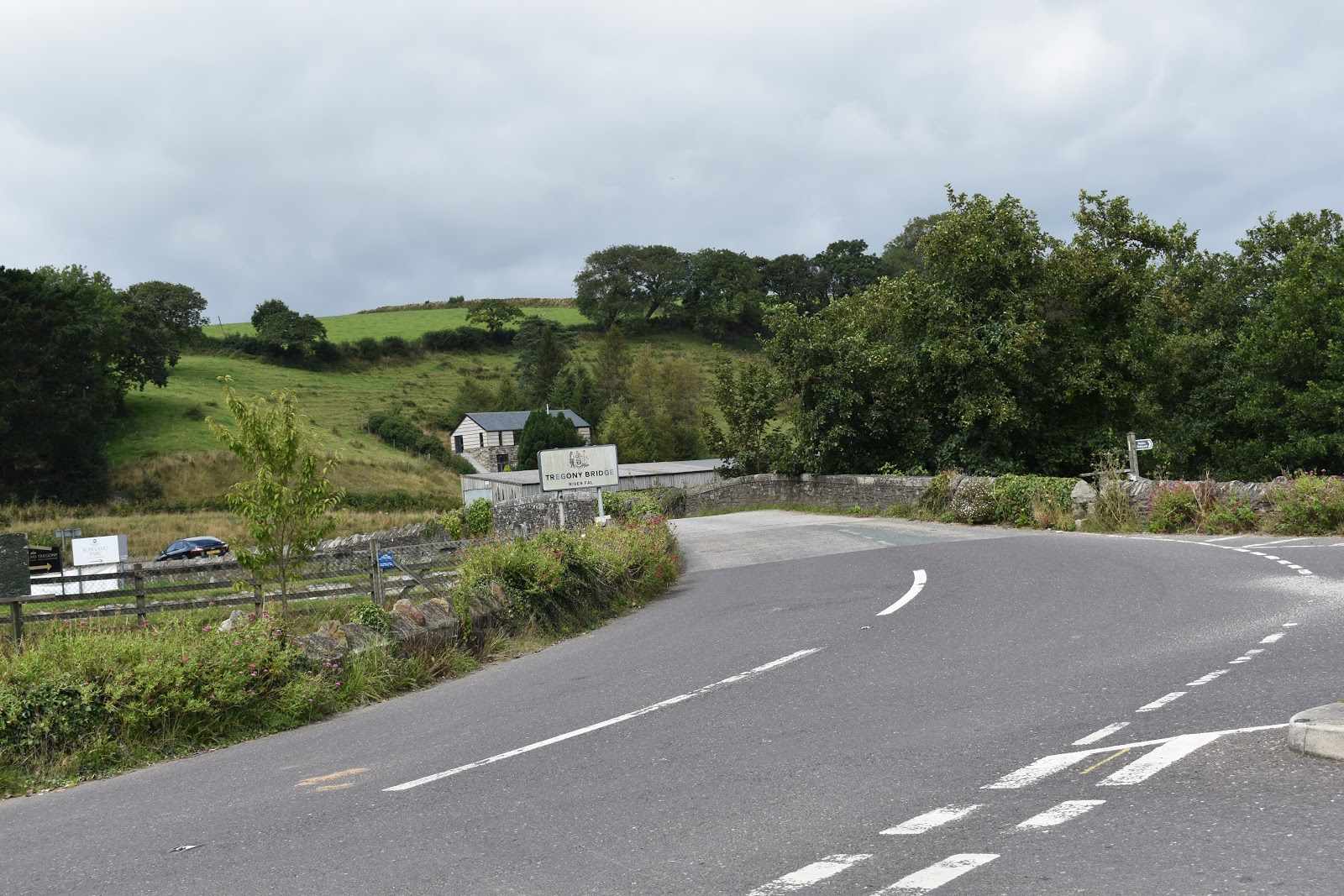
 The Bridge

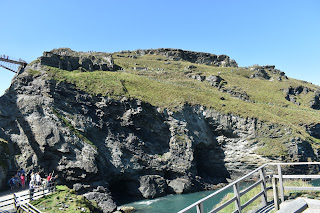
We decided to make our way back to Saltash via Tintagel on Cornwall's north coast famouse for it's castle and Arthurian links to view the new footbridge connecting the two parts of the casle.  It wasn't a great idea as it was the Friday of the August Bank Holiday weekend so the place was absolutely teeming with people!
Tintagel, along with many other Cornish sites has a long history going back to the first century and has been a religious site as well as a military site.  There is a long history of trading links between the area and the mediterranean since the Roman Occupation.
Back when I first visited Tintagel back in the 1950s the two parts of the castle were still reasonably well connected by a neck of land, however, that neck of land was destroyed by extreme weather events and it became difficult for visitors to access the island. so the new bridge has rectified that situation.

Tintagel Castle - history and legend - English Heritage
Tintagel - Wikipedia
Tintagel Castle - Wikipedia
The history of Tintagel - Country Life
Tintagel in History and Legend - Google Arts and Culture

 The new bridge (with the older bridge below)
 The mainland side of the castle
 The island side of the castle

And here are a couple of photographs taken back in the early 1970s before any bridge was required.


Monday, 19 August 2019

A Visit To Hembury Castle

This morning, Viv and I visited the site of Hembury Castle on the edges of Dartmoor not far from Ashburton and Buckfastleigh. This casle is one of the many motte and bailey castles thrown up by William the Conquerer after his invasion of England and was constructed on the site of an earlier Iron Age hill fort. There was only a temporary wooden building constructed on the site. It is a lovely site in the woods surrounding the moor.

Hembury Castle, Buckfast - Wikipedia
Hembury Castle (legendary dartmoor)

 The Plaque
 The Hill Fort ditch and embenkment utilised by the later castle as well

 The view from the Bailey
 The Motte from inside the Bailey
The Motte

Friday, 16 August 2019

A visit to Buckland Abbey

Yesterday, Viv and I were joined by our friends Eve and Al at Buckland Abbey, a former cistercian monestery which, after the dissoluition of the monateries in the 16th century was converted into a family home and was owned by firstly Sir Richard Grenville and later by Sir Francis Drake. 
The house is situated near the River Tavey between Plymouth and Tavistock
The photos are of the old tithe barn and Eve, Al and Viv in the old stable yard. Thanks to Eve for the bee keeper photo.
 The Medieval Tythe Barn
 My friends Eve and Al together with Viv outside the Cafe
Beekeepers at work
A link to a previous visit to Buckland Abbey
Other links

Wednesday, 14 August 2019

A visit to the Duchy Nursery and Respryn Bridge

Yesterday Viv and I lunched at the Duchy Nursery near Lostwithiel and then went for a short walk along the banks of the River Fowey near Respryn Bridge.

There has been a bridge here since the 13th century and probably a ford before that.

Recently the National Trust erected bo;;ards to prevent larger and heavier vehicles from using the bridge which appear to have been very restrictive to most vehicles.

The duchy of Cornwall Nursery
Hitstoric Respryn Bridge
Hiistoric Cornwall - Respryn Bridge
Ambulance stuck on Respryn Bridge

 The Duchy Nursery

 Lunch at the Cafe
 Respryn Bridge
The Bollards

Tuesday, 13 August 2019

A Tour Around Corwall's Bodmin Moor and Western Devon

Today, Viv and I went on a bit of a mystery tour around Eastern Cornwall and Western Devon. 

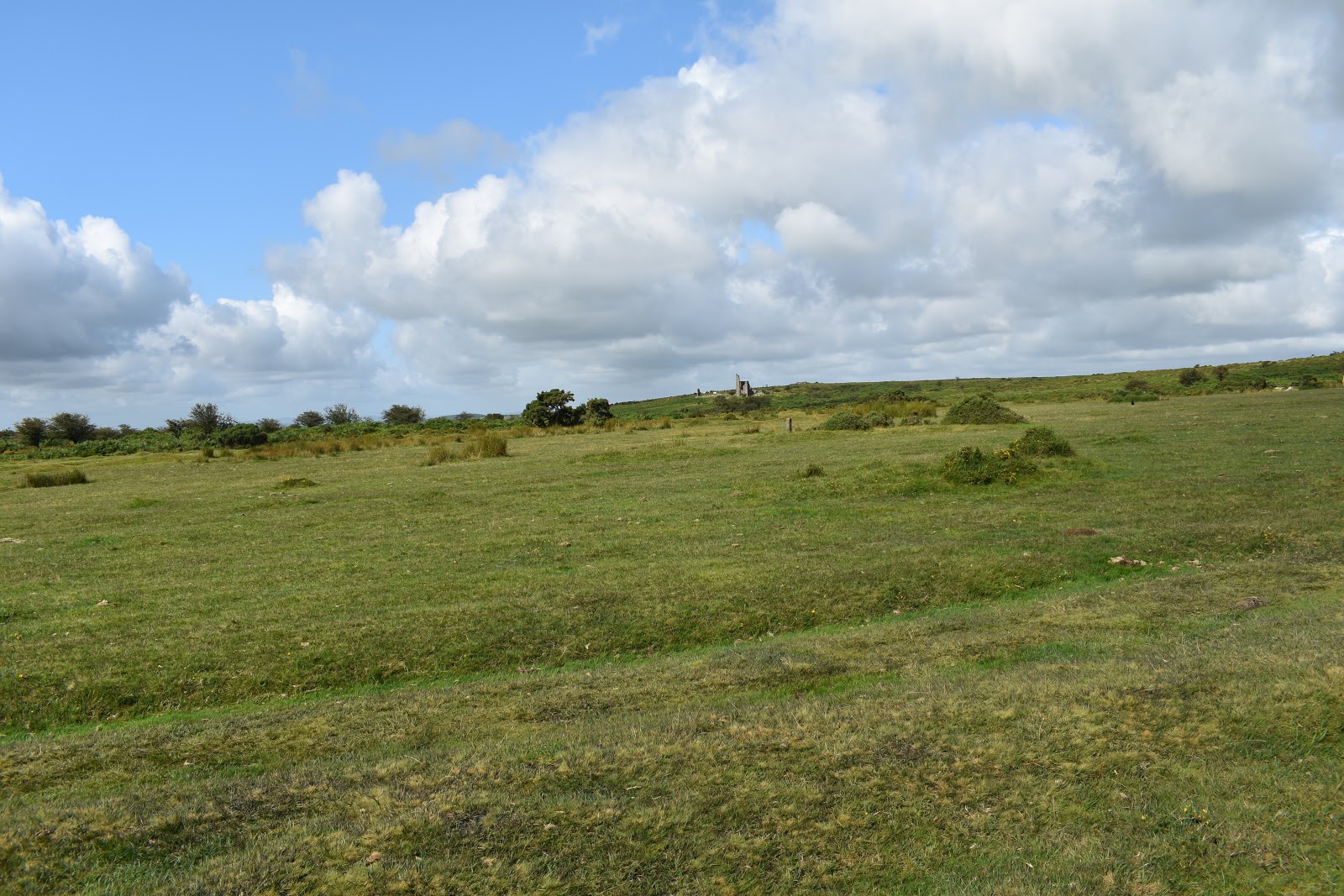
We started off by driving onto Bodmin Moor just north of Liskeard. We stopped off at King Doniert’s Stones which relate to a 9th Century King of Cornwall. We then carried on to Minions where we visited the Hurlers, a Neolithic site consisting 3 concentric circles. This area of Bodmin Moor is littered with the remains of the tin mining industry that grew to its peak at the end of the 19th Century and incudes the remains of many iconic engine houses. 

Moving on, we lunched at the recently upgraded Lifton Farm Shop/Restaurant which is not far from the Cornish town of Launceston, but is just over the border in Devon. It has been recently renovated and updated.  Whilst our lunch was as great as it has always been, the renovations have resulted in a certain reduction in the charm and ambience of the place.

We then drove home down the leafy lanes of Devon and crossed back into Cornwall over a 15th Century bridge over the Tamar River into Cornwall at Horsebridge.


 King Doniert's Stones near St Cleer on Bodmin Moor
King Doniert was a 9th entury Christian King of Cornwall

The Village of Minions on Bodmin Moor in the shadow of Caradon Hill is a village where the whole sweep of Cornish History can be seen the earliest pre-history to the present day. Prehistoric stone circles can be seen along with remains of huts and the remains of tin mining and quarrying of the early 20th Century.
 The Hurlers - Prehistoric stone circles
 The remains of the Engine House of the Phoenix United Mine
 The Lifton Farm Shop near Launceston.
The 15th Century Bridge at Horsebridge near Callington 

A Visit to Rame Head

Rame Head is the end of the Cornish side of Plymouth Sound.  The day we went there it was a rather blustery and cold day.  Getting there is quite interesting, the roads being very narrow and winding and some of the locals can move very briskley around them.

There is a coastguard station there as well as an old medieval chapel.  There are great views one way across Whitsand bay to Looe and the other way towards the Southern Coast of Devon.  Often Naval ships can be seen enteringand leaving as well as othe merchant shipping including the Britanny ferries heading to Britanny and Spain.

Iron age cliff castle Rame Head
Rame Head Coastguard Station
Whitsand Bay - Wikipedia

 The Rame Head Coastguard Station
 Looking toward the Chapel and Cliff Castle
 Whitsand Bay
 Viv watching the Horses
The Hire Car - a Skoda Octavia

Saltash bridges

The town of Saltash on the banks of the River Tamar dates back to the 12th century but Saxon farmers were resident in the area before that.

There was an ancient ferry crossing there which lasted until the building of Brunels's Royal Albert railway bridge  completed in 1859 and the the Tamar Road bridge completed in 1961.  I remember the construction of the road bridge and watching the progress of the construction from the old car ferry.

Saltash Heritage
Saltash - Wikipedia
Tamar Road Bridge - Wikipedia
The Royal Albert Bridge

Whilst lunching at the Sailing Club recently we watched a small steam train crossing the railway bridge.

 Saltash Fore Street
 The Road Bridge from the bottom of Fore Street
 Looking across the road bridge
 Brunel's Bridge with the road bidge obscured behind it
The steam train  with one carriage crossing into Cornwall