Wednesday, 28 June 2017

The Next Stop - The Orkney Islands: Going Back 6,000 Years

Our next stop was Kirkwall, the capital of the Orkney Islands.  It was for me a journey going back 6,000 years to the people who erected,  amongst many other structures, the prehistoric village of Skara Brae, The Stones of Stenness and the Ring of Brodgar.
The Orkney Islands were also the northern home of the Royal Navy in the First and Second World Wars.

Prehistoric Orkney Wkipedia
Skara Brae
Standing Stones In Orkney
The Vikings in Orkney
The Orkney Guide - Vikings.pdf
Scapa Flow Wikipedia

 Arriving at Kirkwall Pier (A little way out of town)
 Disembarking passengers heading for the tour bus
 The bus heading off
 Maeshowe Chambered Cairn/Tomb dated to 3000BC. Viking graffiti has been found inside.
The Stones of Stenness, a Neolithic henge site dating back to 4000BC


The view from the Stones of Stenness
The Ring of Brodnar nor far from the Stones of Stenness and and Maeshowe Chambered Cairn/Tomb
Also dating back to 4000BC 


Viking graffiti can be seen on some of the stones

 Skaill House, Skara Brae, a 17th century Manor House.  The house owner, William Watt discovered the Skara Brae village site in 1850
 The various dwellings and workshops that have been excavated.
Many of the dwellings have disappeared due to the encroachment of the bay and natural erosion over the centuries
The village was abandoned around 4500years ago.  Evidence of an earlier village dating back to 2900BC has been found


Monday, 26 June 2017

Norway - Up and Down the Fjords

When we awoke the next morning, our ship was making her way up the Hardangerfjord towards the towns of Ulvik and then Eidfjord, a distance of 111 miles from the sea.  The mountains towered up each side, some still with the remnants of their winter snow and many waterfalls gushing down to the fjord.  Low cloud and misty rain contributed to the spectacle.  We dropped off some passengers at Ulvik who were doing a long tour over the mountains to Eidfjord, but the rest of us
proceeded there on the ship. We spent the day in and around the town, and in the afternoon some of us went on a trip to the Voringfoss waterfall.
Overnight the ship then travelled back down to the sea and then proceeded up the Sognefjord to the small town of Flam where we did all the touristy things, buying souvenirs, etc.  There is a spectacular railway there which we decided not to use due to the low clouds and rain, but we did visit the railway museum.
Finally we proceeded overnight to Norway's second largest town, Bergen where we spent the day looking around the town.
 The area of Norway we visited
Alongside at Eidfjord


 In the town of Eidfjord
 The old church at Eidfjord
 At the top of the Voringfossen Waterfall
 The Voringfossen Waterfall

 The view down the valley
Another waterfall close by
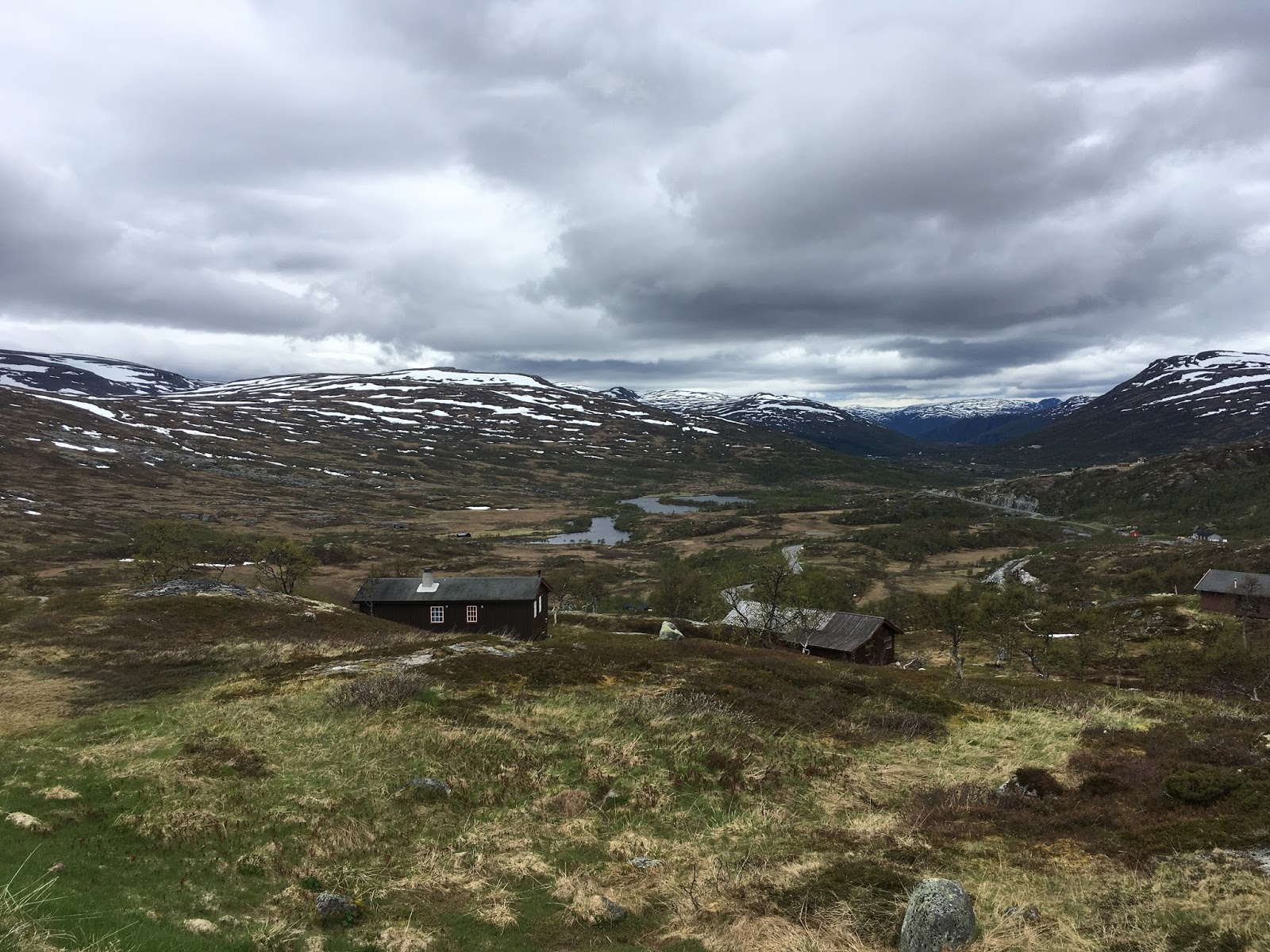
The view across the Plateau
Leaving Eidfjord
 Arriving at Flam on a very damp and cloudy day
Flam Wikipedia
A waterfall emerged from the mist
Flam Village
The Ship and the Fjord
A local ferry arriving at Flam
Thr Rosenkrantz Tower in Bergen.  It was originally built in the 13th Century, but rebuilt after it was destroyed in the second World War
King Haakon's Hall also from the 13th Century
Wikipedia - Bergenhus Fortress
The Harbour in Bergen
The sailing ship "Statsraad Lehmkuhl" in Bergen
Statsraad Lehmkuhl - Wkipedia
About Statsraad Lehmkuhl
Another small sailing vessel
An Oil Rig Tender

Thursday, 22 June 2017

All At Sea

We were all at sea for the next three days with just one stop in Liverpool to pick up the remaining passengers.  Liverpool was experiencing a very wet and very windy day so I was not able to take many photos due to the fact we were struggling to stand up or walk anywhere. We did manage to make it to a coffee shop, but not much more.
The next day we cruised up the Irish Sea and through the passage between the Outer Hebrides and Skye and Northern Scotland where we experienced what was probably the nicest weather of the voyage.  During the night we turned around Cape Wrath and passed along Scotland's North Coast and by morning we were between the Orkneys and Scotland.  By evening we were approaching the Norwegian Coast.

Approaching Liverpool.  It doesn't look wet and windy!
Guess who is famous in Liverpool.  Taken at the entrance to the terminal on the second visit.  It was hard to hold the camera steady on the first visit!
Cruising up the Lower Minch and the Minch between Skye and the Outer Hebrides


Tuesday, 20 June 2017

Visiting Dublin

It was quite a rough passage overnight to Dublin our first port of call, where were picking up more passengers.  As we disembarked for our day's visit we were welcomed by an Irish folk/country trio  We were taking a combined bus and river tour of the city.  The tour took in most of the sites of interest, including the GPO, the site of a major confrontation in in the Irish fight for independence in 1916, The Parliament, the castle, various cathedrals and Phoenix Park.  There wasn't much stopping!
We also learnt of many Irish authors of note.  I found out that Jonathan Swift, author of Gullivers Travels, was Irish.
 Arriving off the Irish coast
 The welcoming musicians
 St Patricks Cathedral
 On the River Liffey

The Jeanie Johnston, a replica of a ship that carried Irish migrants to Australia in the mid 19th century.  These ships were often overcrowded and many passengers die on their voyage

Sunday, 18 June 2017

A Life On The Ocean Wave - North to Norway

Two weeks ago, we set off from Plymouth heading towards Newport, South Wales and boarded the Cruise Ship MS Magellan for a cruise that would take us to Dublin, then Liverpool.   After Liverpool we sailed for Norway and the Orkney Islands before returning to Liverpool via Dublin again.
 The Ship - MS Magellan alongside in Flam, Norway (above) and alongside in Bergen (Below)
 Our Cabin

 A towel sculpture created by our cabin steward, Tony (Pictured below) 

 My friend, Eve, in the Waldorf Restaurant, on a Greek Themed evening
 The self service area in the Raffles Bistro just before breakfast
 Relaxing in the Captains Lounge
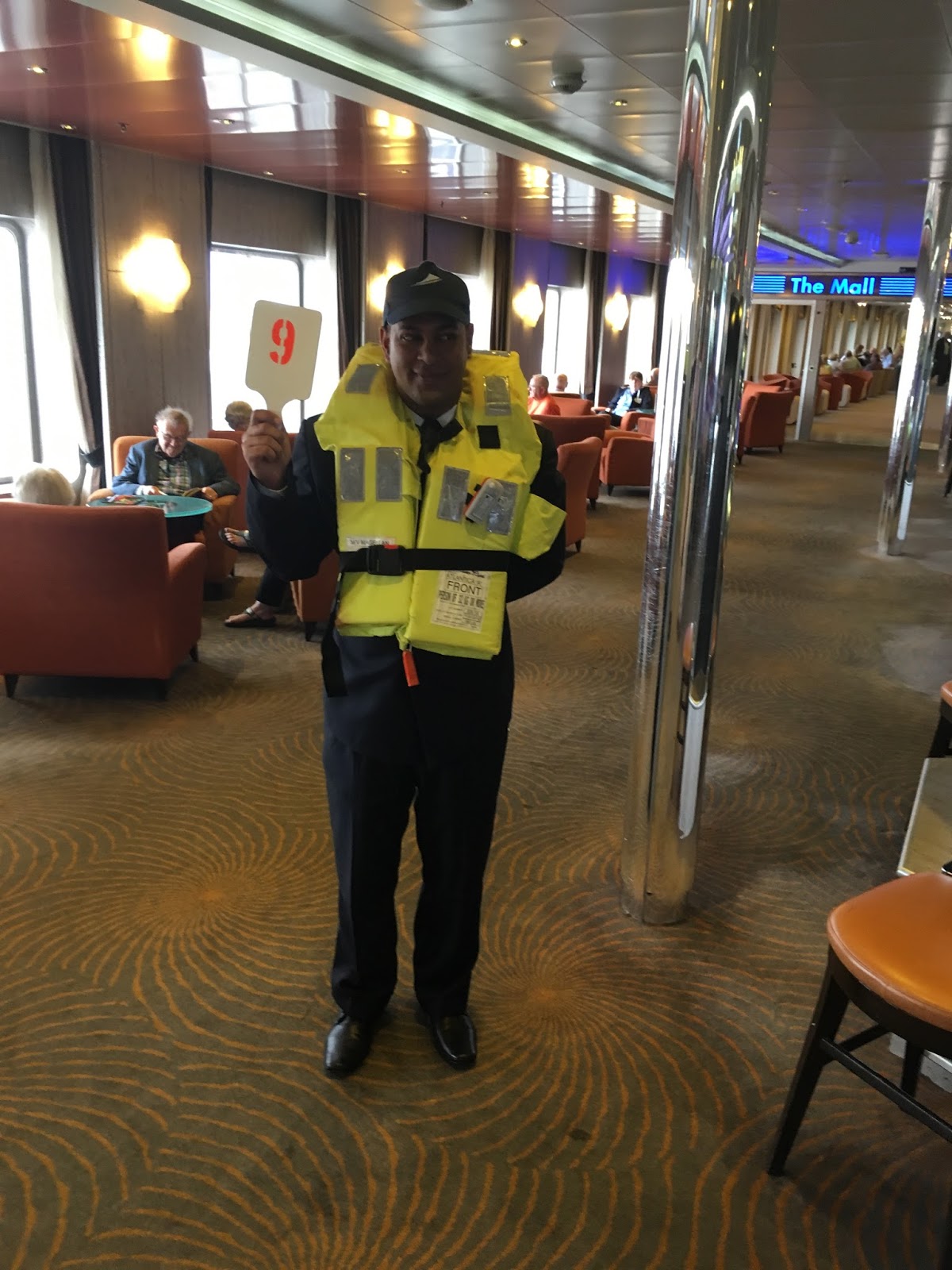
 A member of the crew during a lifeboat drill
At Sea