
Two views of the house. It was recently restored by the National Trust after a Major fund raising campaign.

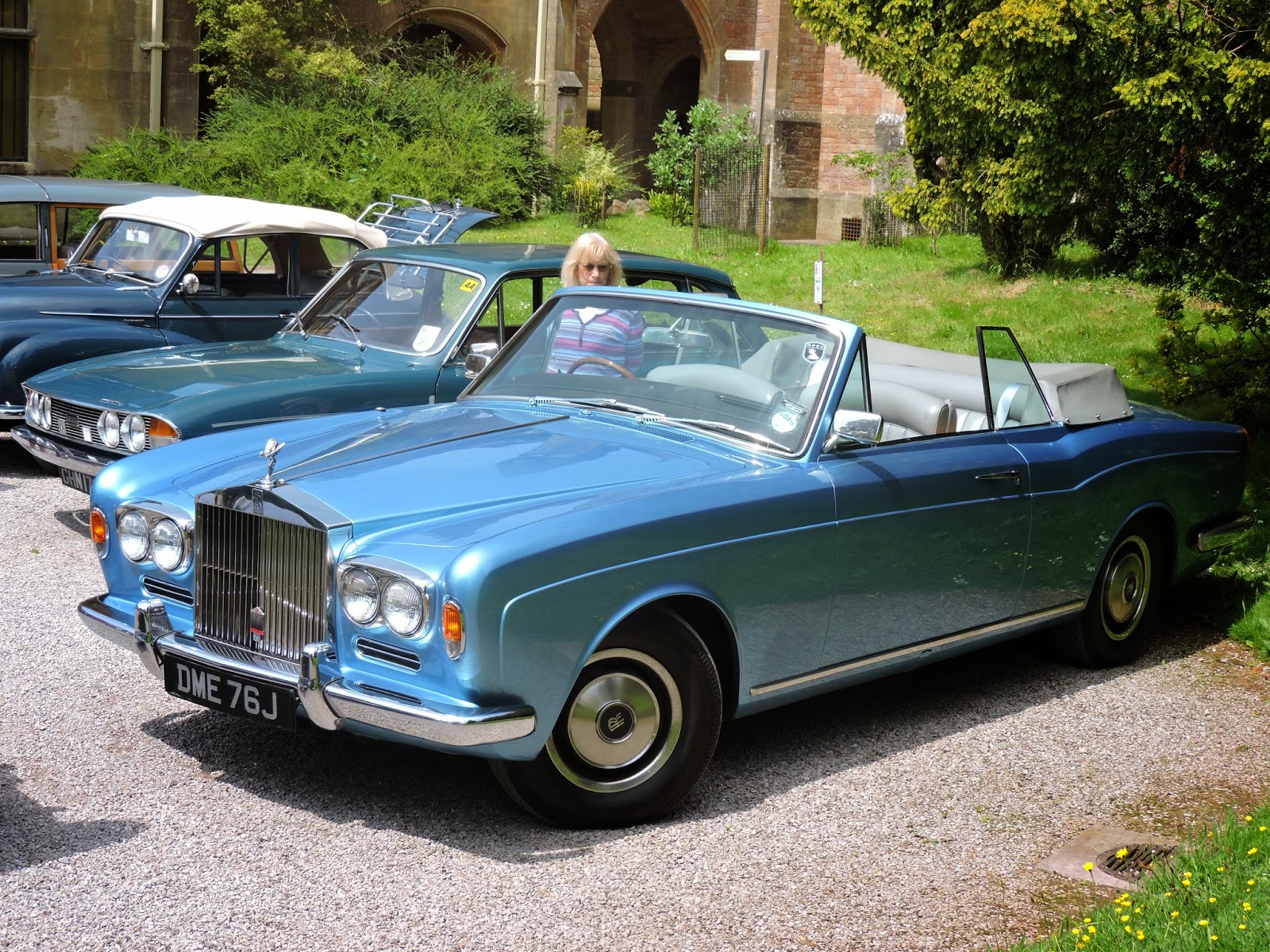
They were having a small classic car display

From the smaller car

to the Rolls Royces!
The next day we drove up through Shropshire and a very little bit of Wales to Liverpool. In doing so we passed through the country where the Corfields, a family that features in my heritage and family tree originated. They were settled around the Wenlock Edge Countryside.

This is Corfield Farm on the banks of the River Corve which flows in to the River Severn

The Corfield name is derived from the name of the river and the earliest Corfield was settled here in the 12th Century

We were looking for a house called Chatwall which was the Corfield family seat. We drove through many very narrow and leafy lanes so I don't think we found it - this is probably the home farm.

However one of the outbuildings seemed to confirm the Australian connection - apparently there are kangaroos ahead!
We finally arrived in Liverpool after much fun with my GPS! We approached Liverpool through the Birkenhead tunnels, but, because of my inability to get into the correct lane when instructed, we ended up taking three trips through the tunnel -at 1 pound 70 pence a trip - and much to the chagrin of Liverpool commuters we annoyed! We did find our hotel in the end, though.
My connection to Liverpool is that My father attended the Schoolship HMS Conway between 1934 and 1936 and later he was employed by Elder Dempster Shipping company firstly as a cadet and then as a 3rd and second officer from 1937 until 1948. Elder Dempster traded with West Africa and was based in Liverpool.
Here are some links with information about HMS Conway and Elder Dempster.

HMS Conway moored in the River Mersey between the wars

The Anchor from HMS Conway which is now at the entrance to the Liverpool Maritime Museum which is on the Albert Dock in Liverpool

The Bar Lightship which used to be stationed at the mouth of the River Mersey. It appears to be coffee shop now.

There was a Tug being restored as well as a couple of sailing vessels which seemed to be used for educational purposes


This is the Schooner Kathleen and May. I last saw her in Milbay Docks, Plymouth when the First episode of the TV series of the Onedin Line was being filmed

This is the dock where all the liners that were based in Liverpool sailed from and to. When my father was working on The Elder Dempster Mail Boats he would have sailed from here. Later we took many voyages as a family when my father was working as a Harbour Master and Pilot in Nigeria for the Nigerian Marine and later for the Nigerian Ports Authority. My first voyage appears to have been when I was four years old so my memories are not very clear.
These days the Mersey Ferries operate from here. Also Cruise Liners dock here when they visit the city

A Mersey Ferry with that former liner dock and the famous Liver Birds in the background.

A Liver Bird

The Ferry across the Mersey we took a trip on

During the ferry trip we visited the U Boat Museum where they have a U Boat U 534 cut into four sections on display. This U boat was salvaged from the Baltic Sea and is similar to the one that torpedoed My fathers ship the Adda in 1941.


The Enigma Code Machine used on the U Boat

We then took a trip on a Bus that showed us the sights of Liverpool. We drove down the fabled Lime Street on our way. Lime Street was immortalised in the song Maggie May
We then visited the new Liverpool Catholic Cathedral.

The front of the Cathedral

Inside the Cathedral

The view from the New Cathedral to the older Anglican Cathedral

The Anglican Cathedral
We left Liverpool and headed for home. On our way to another stop in Gloucester we called into another National Trust property near Worcester called Croome. Croome was the home of the Earls of Coventry and later became an RAF station. During the war development of Radar took place here.

Croome from the Church. There is a lot of Restoration work going on here.

In the gardens created by Capability Brown


The front of the House
When we got home we were visited by Shane an Rosemary who live not far from me in Australia. We had a day looking around Plymouth. Here they are by the plaque honouring the Tolpuddle Martyrs. The ones that returned from being transported to Australia landed in Plymouth at the Barbican in Sutton Harbour.


